Cracking the Code: 2025 Digital SAT Score Explained
Crack the code behind 2025 Digital SAT scores: understand adaptive module routing, how hard vs easy modules affect scoring, use calculators strategically, and decode percentiles for college admissions success.
The moment you click "View Scores" on the College Board portal, your heart skips a beat. You see a number—maybe a 1250, maybe a 1480. But in the era of the Digital SAT, that number hides a complex secret.
Unlike the old paper tests where "one right answer equals one point," the 2025 Digital SAT operates on a sophisticated adaptive algorithm. Understanding how your score is built is just as important as the score itself.
This guide will take you beyond basic arithmetic. We will explore how to use the SAT Score Calculator not just to check your homework, but to engineer a better score for your college applications.
The "Black Box": How Adaptive Scoring Actually Works
If you have used our calculator, you might have noticed something strange: You can get the same number of questions wrong in two different scenarios, but end up with completely different scores. Why?
It comes down to Multistage Adaptive Testing (MST).
Think of the Digital SAT like a video game. Everyone starts on the same level (Module 1).
- Scenario A: You perform exceptionally well in Module 1. The system routes you to the "Hard" Module 2.
- Scenario B: You struggle in Module 1. The system routes you to the "Easy" Module 2.
Here is the kicker: The questions in the "Hard" module are worth significantly more points. A student who reaches the Hard module but misses 5 questions will almost always score higher than a student who falls into the Easy module and gets everything right.
Why This Matters for Your Calculation
When you use the Digital SAT Score Calculator, you aren't just adding up correct answers. You are simulating this routing. This is why standard "flat" calculators (like the ones for the old paper test) are now obsolete. They cannot account for the "weight" of the questions you faced.
Understanding Module Routing
The adaptive algorithm analyzes your performance in real-time during Module 1. Your accuracy and the difficulty of questions you answer correctly determine your path. This isn't random—it's a sophisticated system designed to provide a more accurate assessment of your abilities.
The Point Value Difference
Questions in the hard module carry more weight because they test higher-level skills. Missing a question in the hard module doesn't penalize you as much as it would in a linear test, because the system recognizes you're operating at a higher difficulty level.
Case Study: The "Safety" vs. The "Reach" Strategy
To make this practical, let's look at two hypothetical students, Alex and Maya, who are planning their 2025 admissions cycle. They both used our calculator to analyze their practice tests.
Alex: The "Bubble" Candidate
- Goal: State University (Target SAT: 1200)
- Current Performance: Math is strong, English is inconsistent.
- The Discovery: Alex realized that on the English section, he was missing too many questions in Module 1 due to rushing. This bumped him to the Easy Module 2. Even though he aced Module 2, his score was capped at 560.
- The Fix: Alex shifted his strategy. He slowed down on Module 1 to ensure he qualified for the Hard Module 2. Even though he got more questions wrong in the second half, his score jumped to 610 because he was playing in the "major leagues."
Maya: The Ivy Aspirant
- Goal: Top Tier University (Target SAT: 1500+)
- Current Performance: Consistently high, hovering around 1450.
- The Discovery: Using the Standard SAT Calculator, Maya noticed that losing points on "Heart of Algebra" questions hurt her score more than "Data Analysis" questions in her specific test version.
- The Fix: She stopped drilling generic math and focused entirely on the specific question types that carried the highest weight in the adaptive curve.
Key Takeaways from Case Studies
Both students used strategic calculator analysis to identify their weaknesses and adjust their approach. The key is understanding not just what you got wrong, but where in the adaptive sequence those mistakes occurred.
Decoding Percentiles: Is Your Score "Good"?
A raw score is meaningless without context. A 1400 puts you in the top 7% of test-takers nationally, but for a school like MIT, it places you in the bottom 25% of applicants.
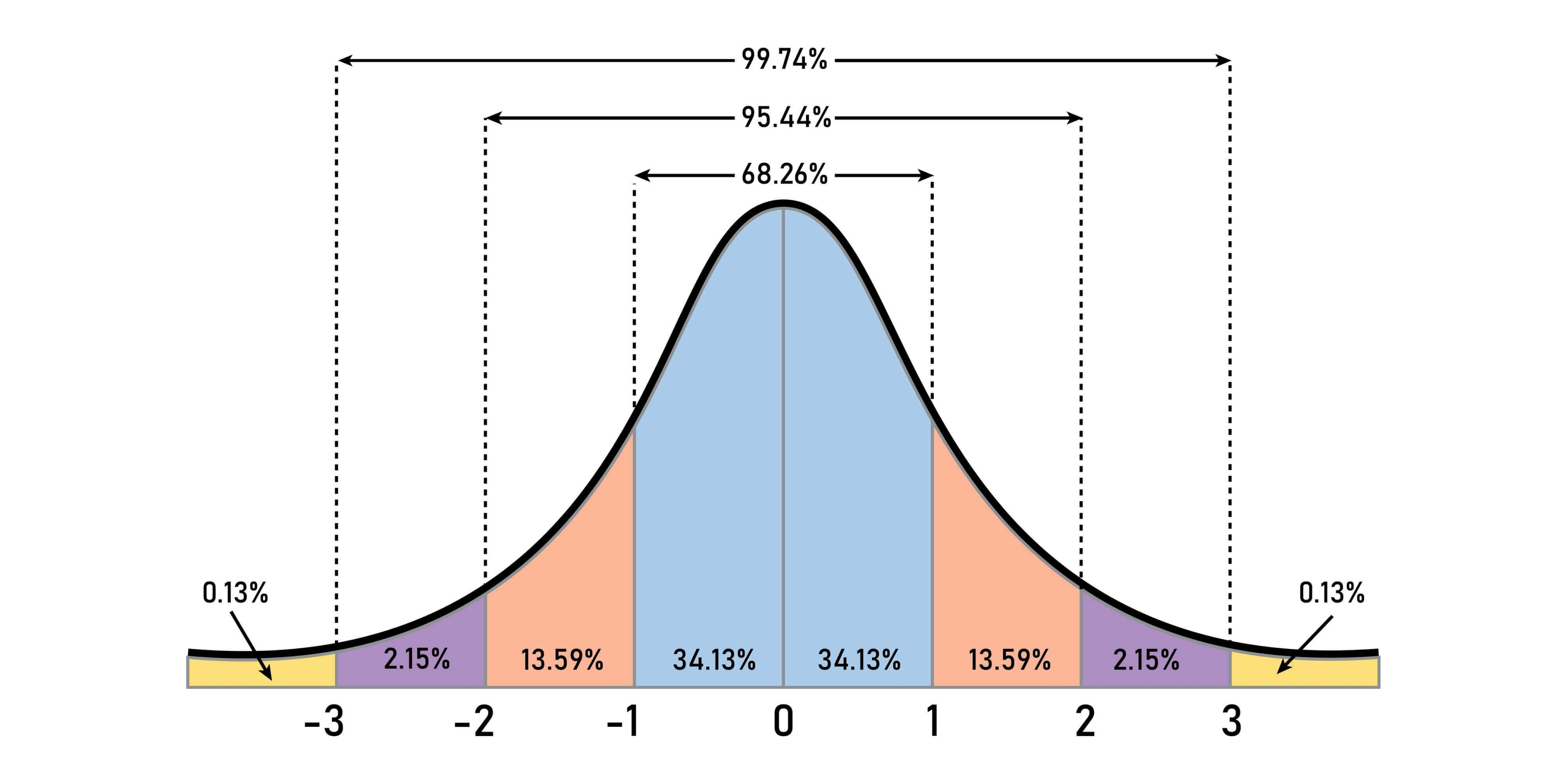 The normal distribution curve illustrates how SAT scores are distributed among test-takers. Most students score near the average (around 1050), with fewer students achieving very high or very low scores. Understanding where your score falls on this curve helps you interpret your percentile ranking.
When you input your data into our calculator, pay close attention to the Percentile Ranking. This metric tells you how you stack up against the competition.
| Score Range | Approximate Percentile | Typical College Tier |
|---|---|---|
| 1550 - 1600 | 99th+ | Ivy League, Stanford, MIT |
| 1400 - 1540 | 93rd - 99th | Top Public Universities (UCLA, UNC) |
| 1200 - 1390 | 74th - 92nd | Competitive State Schools |
| 1050 - 1190 | 50th - 73rd | National Average |
Note: These ranges can shift slightly based on the specific 2025 testing cohort.
Understanding Percentile Context
Percentiles provide crucial context for your score. A score that seems "good" nationally might be below average for your target school. Always check your percentile in relation to your college goals.
Using Percentiles for Goal Setting
Use percentile data to set realistic improvement targets. If you're at the 50th percentile and aiming for a competitive state school, you might need to reach the 75th percentile to be competitive.
The "Super-Score" Advantage
One of the most practical uses of an accurate calculator is planning your Superscore.
Most US colleges participate in "Superscoring," meaning they take your highest Math score from one test date and combine it with your highest Reading/Writing score from another date.
Actionable Tip: Don't try to improve everything at once.
- Test Date 1 (March): Focus 80% of your energy on Math. Use the calculator to track your Math trajectory. Ignore the English score for now.
- Test Date 2 (May): Switch gears. Maintain your Math skills but pour your effort into Reading/Writing grammar rules.
- The Result: You might get a 750 Math / 600 English in March, and a 650 Math / 740 English in May.
- March Total: 1350
- May Total: 1390
- Superscore: 1490 (750 + 740)
Using the calculator allows you to predict these combinations before you even step into the testing center.
Strategic Superscoring Planning
Plan your test dates strategically. If you're stronger in one section, take the test when you can maximize that section, then focus on improving the other section for your next attempt.
Calculator Tools for Superscoring
Use our SAT Score Calculator to model different score combinations and see how they would affect your superscore. This helps you set realistic goals for each test date.
Common Pitfalls to Avoid in 2025
As we navigate the second full year of the Digital SAT, we see students making the same mistakes.
- Ignoring the "Experimental" Questions: The College Board includes questions that do not count toward your score to test them for future exams. However, you never know which ones they are. Treat every question like it's the one deciding your score.
- Over-relying on Old Linear Charts: If you are using a PDF scoring chart from 2019, throw it away. The Digital SAT has fewer questions, meaning each question is worth more points. A simple mistake costs you more dearly now than it did five years ago.
- The "Desmos" Trap: The built-in Desmos calculator is a powerful tool for the Math section. Many students fail to learn it, solving problems by hand that could be solved in seconds graphically. This costs time, leading to rushed errors at the end of the module.
Avoiding Calculator Mistakes
Don't underestimate the power of the built-in Desmos calculator. Practice using it before test day to save valuable time on complex math problems.
Staying Current with Scoring Changes
The Digital SAT scoring system continues to evolve. Always use the most current calculator tools and scoring information, not outdated resources from the paper test era.
Conclusion: Data is Your Best Tutor
The SAT is no longer just a test of intelligence; it is a test of preparation and strategy. The shift to digital adaptive testing has made the scoring formula more opaque, but tools like the SAT Score Calculator bring transparency back to the process.
Don't just wish for a higher score. Calculate it. Analyze your weak points, understand the adaptive routing, and walk into the test center knowing exactly what you need to do to reach your target.
Ready to see where you stand? Run your latest practice test numbers through our 2025 Digital SAT Calculator now.
References & Further Reading
- College Board. "The Digital SAT Suite of Assessments Specifications Overview." 2024.
- U.S. News & World Report. "What is a Good SAT Score?" 2025 Edition.
- Common Data Set 2024-2025 (Harvard, University of Michigan, University of Texas).
Frequently Asked Questions
How does adaptive scoring work on the Digital SAT?
The Digital SAT uses Multistage Adaptive Testing (MST). Your performance in Module 1 determines whether you're routed to an easier or harder Module 2. Harder modules are worth more points, so reaching the hard module can result in a higher score even with more wrong answers.
What is superscoring and how can I use it strategically?
Superscoring allows colleges to combine your highest Math score from one test date with your highest Reading/Writing score from another. You can strategically focus on one section per test date to maximize your superscore.
How do percentiles help me understand my SAT score?
Percentiles show how you rank compared to other test-takers. A 1400 puts you in the top 7% nationally, but context matters—for competitive schools like MIT, this might place you in the bottom 25% of applicants.
Why do I get different scores with the same number of wrong answers?
The adaptive nature of the Digital SAT means the difficulty of questions you face affects your score. Students who reach the hard Module 2 get questions worth more points, so missing 5 questions in a hard module can still result in a higher score than getting everything right in an easy module.
What are common mistakes to avoid on the 2025 Digital SAT?
Avoid ignoring experimental questions (treat every question as if it counts), don't rely on old linear scoring charts from 2019, and learn to use the built-in Desmos calculator effectively to save time on the Math section.
SAT Calculator Team
The SAT Calculator Team specializes in data-driven analysis of SAT scoring and college admission trends.
Found this helpful?
Share it with others preparing for the SAT!
Related Articles
How SAT Scores Are Calculated in 2025: Guide
Complete guide to SAT score calculation in 2025: raw to scaled conversion, Digital SAT adaptive modules, paper SAT curves, and practical score estimation strategies for students.
Digital SAT 2025 Complete Scoring Guide
A step‑by‑step guide to Digital SAT 2025 scoring: raw→scaled conversions, adaptive modules, section weighting, and practical strategies.
Bluebook Paradox: Why Practice Scores Lie & Decode SAT
Why do Bluebook test scores fluctuate? Learn how the adaptive Digital SAT algorithm works, why easy mistakes hurt more, and how to calculate your true score.
Get More SAT Tips
Get the latest SAT tips and strategies delivered to your inbox